
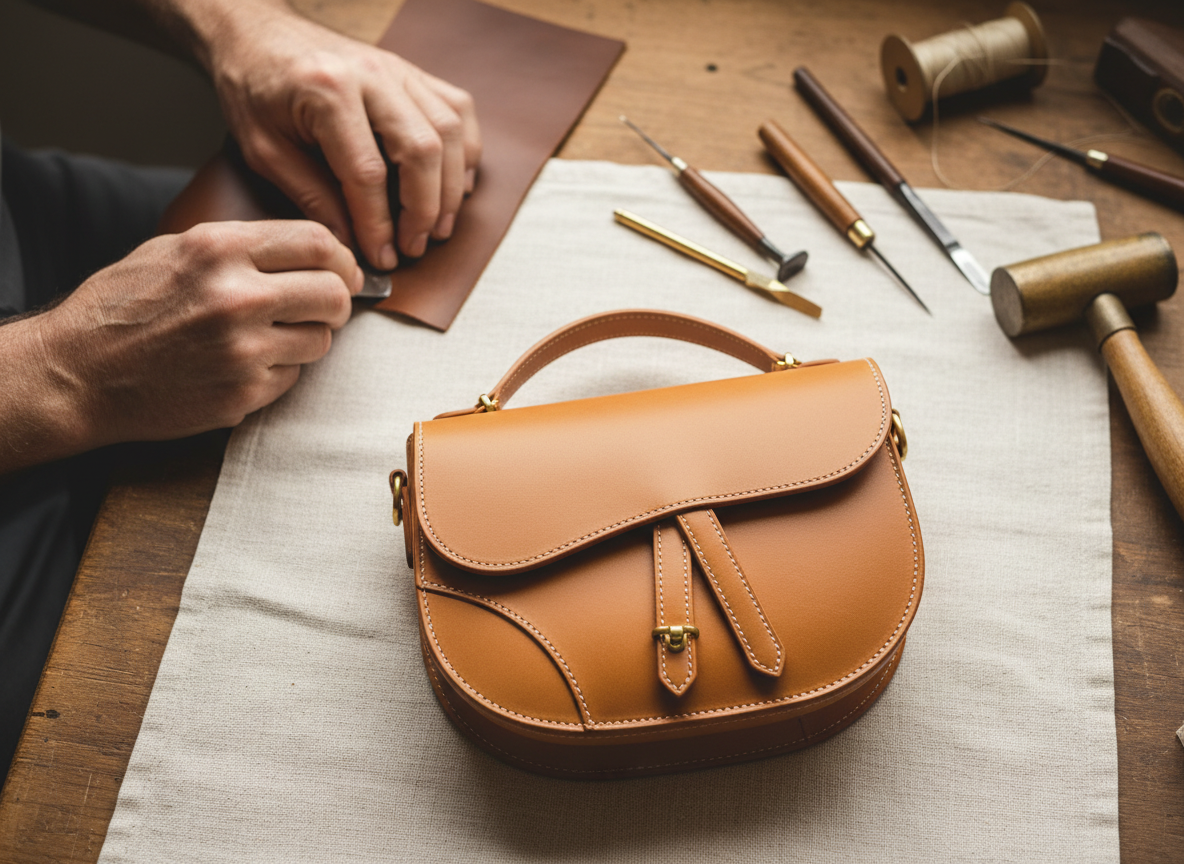
There’s a moment that happens, usually sometime in the second Zoom call with a client, where something shifts. A woman will be enthusiastically discussing leather—Buttero or Alran, the weight she wants, the proportions that feel right for her body—and then, almost incidentally, she’ll say something like: “I don’t want anyone to know what it cost.” Or sometimes it’s phrased differently. “I want people to have no idea where this came from.” Or, my favorite, delivered with a kind of exhausted clarity: “I’m finished with the whole recognition thing.”
It’s something I’d heard before but hadn’t quite grokked the meaning of; I thought I was overhearing a discrete preference. A particular taste in aesthetic minimalism, perhaps. Or an environmental concern. Something self-contained and individual. But after a while I came to understand that what I was hearing was something far more significant. I was witnessing the fracture point in a philosophy of consumption that has dominated the Western luxury market for the better part of fifty years.
These women have already arrived, in the way that matters. They’ve built things. Accumulated resources. Made difficult professional choices and lived with the consequences. They know what it costs—financially, temporally, emotionally—to acquire the things that are supposed to signal their arrival. And increasingly, they’ve come to find that what the luxury industry spent decades convincing them to want has become, well, complicated. Burdensome, sometimes. Embarrassing, even.
What they want now is something that contradicts nearly everything they were told to want. They want something that doesn’t announce. Doesn’t perform. Something that will remain essentially private—understood fully only by themselves and perhaps by the few other women who’ve developed enough discernment to recognize it. They want, in other words, something that operates according to an entirely different logic of status. And they’re discovering, rather to their own surprise, that this alternative logic is far more luxurious than anything the conventional luxury market could offer.
This is what I’ve come to call the anti-status luxury movement. Not because it opposes luxury itself, but because it has abandoned the equation that made luxury visible.
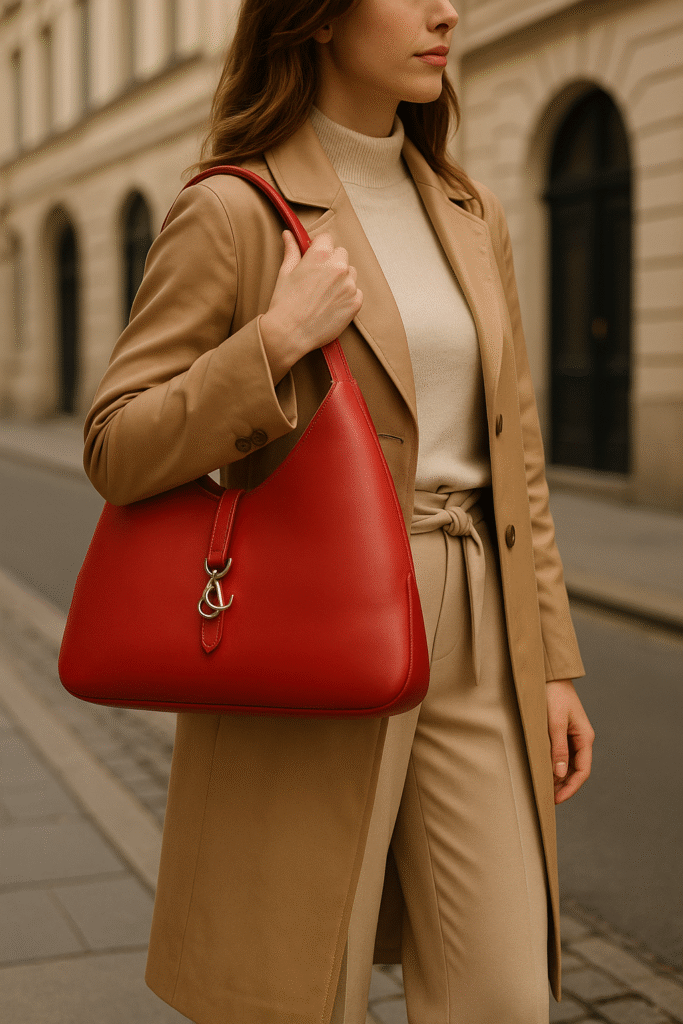
If you paid attention to how luxury worked for the past fifty years, you’ll have understood a simple principle: visibility equals value. The most expensive handbag was the one everyone could recognize. The desirable object was the one that announced itself. A woman’s handbag was essentially a billboard, and the legibility of that billboard—how easily it could be read, how unmistakably it conveyed information about the wearer’s economic status—determined its success.
There was actually a kind of logic to this, at the time. When access to luxury goods was genuinely limited by manufacturing capacity and distribution, owning something recognizable meant something. It meant you had capital. It meant you had access. It meant you were part of a genuinely select group. The logo was the visual equivalent of a limited edition. Possession of it said something about where you actually stood.
But the very mechanisms that created scarcity eventually destroyed it. Mass manufacturing, global distribution, the sheer efficiency of modern capitalism—all of these things did exactly what they were designed to do. They made luxury goods available at scale. Which is to say, they made them accessible. Which is to say, they made the logo meaningless.
I notice that almost nobody wants to talk about the specific moment when logos stopped working, but it’s worth examining honestly. The logos could be copied, and they were. They could be democratized, and they were. Within a few years, a woman carrying a Gucci bag—and I’m not singling out Gucci, they’re just convenient shorthand—couldn’t know whether the person sitting next to her on the plane had paid $2,500 for it or $50. Couldn’t know if it was genuine or counterfeit. The symbol, in other words, had become unreliable.
What emerged from this collapse wasn’t a return to anonymity in luxury goods. That would have been too simple, and it would have violated something fundamental about human nature—our tendency to want to signal something about ourselves. Instead, there was a slow, almost imperceptible migration toward what has since been termed ‘quiet luxury.’ A form of consumption that signals status through an entirely different mechanism: through understanding. Through knowledge. Through the kinds of details that only someone educated in the particulars of craftsmanship could possibly recognize.
The psychology of this shift is worth taking seriously, because it tells us something about how status actually works among people who have achieved it. Research into contemporary luxury consumption keeps uncovering this inconvenient truth for the traditional luxury industry: people with genuine expertise and genuine resources prefer goods that lack the most prominent brand identifiers. Those with deep knowledge of quality actually move away from the most obvious signals. They know they have enough money not to prove anything to anyone. And in that knowledge, something changes.
The visible logo, in this context, becomes not a marker of status but a marker of status anxiety. It becomes something you’d have to explain, rather than something that speaks for itself.
Here’s where I need to be careful, because this is where I’ve watched people get confused about what I’m actually arguing. I’m not opposed to visible logos. I’m not suggesting that a leather bag shouldn’t bear any marker of its maker. What I’m talking about is the motivation behind the choice. There’s a difference—a profound one—between carrying something that has a visible mark because it’s made by a craftsperson whose work you respect, and choosing something primarily because the logo will be seen.
A bag I make might have a subtle mark on it. Hidden, most likely, in a place where the person who cares to look would find it. There for those who understand what they’re looking at to recognize. That’s one thing. But the deliberate brandishing of a logo—the choice to carry something largely because of its visibility—that’s operating according to an entirely different principle. It’s a statement directed outward. And the women I work with have largely stopped being interested in those kinds of statements.
When they come to me looking for artisanal leather products, they’re not asking me to make them anonymous. That’s not what they want. They want something more nuanced: they want to be understood by the right people and ignored by everyone else. They want external recognition to be beside the point. They want to choose based on internal satisfaction. On knowing that what they’re carrying is the product of genuine judgment and care. On understanding the choices embedded in every stitch—why that particular thickness of leather, why that hardware, why that proportion.
They’re anti-performative consumption. Which is a different thing entirely from being anti-consumption.
If logos have lost their power to signal anything meaningful, what’s replaced them? The answer is, in a way, both simpler and more sophisticated: authenticity. And I don’t mean that as a marketing term, though God knows the word has been appropriated for that purpose. I mean something much more literal. The ability to know, with reasonable certainty, that what you own was made a particular way, by particular hands, using materials you understand, according to principles you can comprehend.
This has become genuinely rare, which makes it genuinely luxurious.
We’re living in a particular moment in the history of commerce where the word ‘handmade’ appears on tags affixed to items produced almost entirely by machines. Where small batch production is simulated through artificial scarcity. Where authenticity is marketed. Where you can buy something that claims to be artisanal, that looks handmade, that tells a story about its origins—and have almost no way of verifying any of it.
In this context, actual authenticity—the verifiable kind, the kind you can trace—has become a commodity in itself. And like all rare commodities, it carries a premium. Not because someone is charging more for it, necessarily, but because it genuinely is more scarce.
The luxury industry doesn’t seem to have fully reckoned with the fact that these two things—rarity and recognition—are not the same thing, and they often exist in direct opposition. A luxury item that everyone can identify is not actually rare. It’s familiar. It’s proliferated. Its scarcity is a fiction maintained through price point and marketing, not through any actual limitation on availability.
True rarity means the thing itself is genuinely scarce. Not expensive (though it may be), but actually limited in a way that cannot be arbitraged away by manufacturing more of it. When I create a handcrafted leather handbag, by definition it is rare in that actual sense. By definition, it cannot be mass-produced. There is only one of it in the world, or at most a handful if a woman commissions a few custom leather bags with similar specifications.
This isn’t a marketing claim I’m making. It’s a material fact. No factory, no matter how sophisticated its machinery, can replicate what happens when a piece passes through the hands of someone who has spent time and effort learning their craft. It cannot capture the thousands of small judgments that get embedded in the making—the decision to curve the leather slightly differently on this bag because of this woman’s particular pelvis width.
The women who seek out custom leather bag makers understand this, though they might not articulate it in exactly these terms. They understand that a bag which only they truly know the value of is far more luxurious than a bag that anyone with sufficient capital could theoretically purchase. They’re not acquiring a symbol. They’re acquiring a coup de cour. And that coup de cour evidences its creation at loving hands.
There’s a psychological dimension here that deserves more attention than it usually gets. When you know who made your bag—when you can actually picture the craftsperson, understand their methods, appreciate the decisions they made in the making of it—something shifts in the ownership experience. You’re not just carrying an object. You’re carrying a relationship. You’re carrying evidence of someone else’s competence. Their taste. Their care.
I don’t mean this sentimentally. I mean it neurologically. The research is actually quite clear on this point: people derive greater satisfaction from items they understand deeply than from items whose value is merely asserted by marketing. A bag whose craftsmanship you can recognize, whose materials you’ve actually chosen and know the properties of, whose maker you know and can envision working—this registers differently in the mind. It provides satisfaction that no amount of visible branding can replicate, because the satisfaction is not about external validation. It’s about an internal recognition of quality.
This is where the economics become almost beside the point. Yes, you might pay more initially for a bespoke leather bag than for a mass-produced luxury item. But a woman who invests in genuine handmade leather goods reports something different over time: she doesn’t experience buyer’s remorse. She doesn’t grow tired of it and move on to the next thing. She develops an ongoing relationship with the object. She notices things about it in the third year that she didn’t notice in the first month. She understands its qualities more deeply over time. And that deepening understanding itself becomes a form of luxury—private, irreproducible, entirely hers.
There’s something curious that happens when you reach a certain level of genuine affluence. At some point, you realize that the need to be recognized as successful has become a burden. It’s interesting to observe because it usually comes as a surprise to them. They’ve spent decades operating under one assumption—that visibility of their status matters—and then something shifts.
They come to me explicitly tired. Tired of performing wealth. Tired of the constant low-level anxiety that accompanies obvious luxury consumption—the subtle tension of managing what your possessions say about you. Tired of the guilt that sometimes accompanies flaunting resources in a world where the inequality is increasingly impossible to ignore. Tired, often, of the whole exhausting apparatus of being perceived as successful.
What they discover when they choose quiet luxury, when they choose handmade leather goods and artisanal craftsmanship over the recognized luxury brands, is something that initially surprises them: freedom. Not the freedom to acquire more (they can already do that). But the freedom to stop proving. To stop signaling. To move through the world without constantly managing what their possessions communicate about them.
There’s a particular kind of ease that comes with that cessation. It’s a relief.
The research on this is actually quite serious, and it’s worth taking at face value. Studies on luxury consumption have documented something psychologists call ‘cognitive dissonance’ in high-income consumers—a persistent internal conflict. When wealthy individuals engage in conspicuous consumption, the deliberate visible display of expensive goods, they report experiencing contradictory feelings simultaneously. There’s pleasure in acquisition, yes. But there’s also guilt. A sense of inauthenticity. What researchers describe as ‘hubristic pride’—which is, quite importantly, something the person often perceives as undesirable even in themselves.
This dissonance is particularly pronounced in a specific demographic. Women who are aware of income inequality. Who hold progressive values. Who think of themselves as thoughtful people. For these women, carrying a bag that essentially proclaims your wealth to everyone who sees it can feel like a contradiction. Like a betrayal of your own stated values. It generates shame rather than satisfaction.
In contrast, women who choose bespoke leather bag creation, who invest their money in quiet luxury and genuine artisanal products, report something distinctly different. They report a sense of integrity. A sense that their consumption choices actually align with their real values. They’re not performing wealth. They’re simply living with things they love, made by people they respect, in ways that feel coherent with who they actually are. The contradiction dissolves.
There’s a particular kind of confidence that emerges from knowing something is excellent without requiring others to verify it. This confidence is the opposite of fragile. It’s not dependent on external validation. It’s the confidence of someone who understands quality deeply, or who deeply appreciates expertise, and holds that knowledge internally.
A woman carrying a handmade leather handbag from an independent craftsperson doesn’t need the person sitting next to her on the plane to recognize that her bag is exceptional. She doesn’t need anyone to comment on it. She doesn’t need it to be known. She knows it. She understands why it’s exceptional. She can feel the leather, recognize the proportions, understand the construction. And that knowledge is sufficient.
This represents a kind of psychological maturity that the entire luxury industry has largely abandoned in its pursuit of scale and visibility. But it’s exactly what the women I work with are seeking. They want to own things for reasons that are internal rather than external. They want luxury to feel like a private pleasure rather than a public announcement. They want to exist in the world without constantly managing their image.
That’s actually a profound shift in what luxury means.
When someone chooses a handmade leather bag over a factory-produced luxury item, they’re making a statement. But—and this is important—the statement is directed inward. It’s to themselves. They’re saying: I have taste. I understand quality. I appreciate the work of another human being. I value things that are made to last. I prefer rarity to recognition. I’d rather understand something deeply than be understood by everyone.
These aren’t small things. These are identity statements. The difference is that they’re more powerful precisely because they’re not broadcast. They’re not on display. They shape how the woman wearing the bag moves through the world, how she experiences herself, what she has come to value. Over time, that shapes everything.
Walk into a room full of women carrying luxury handbags and the ones who understand craftsmanship will recognize each other. Not through logos. Through something much more subtle.
Through proportion. Through the particular way leather has been finished. Through premium hardware that was chosen for classic understatement rather than flash. Through stitchwork that reveals a particular kind of care—not obsessive, just thoughtful. Through construction methods that are visible only if you know how to look, or have been taught how to look.
This is something that insiders in the world of genuine craftsmanship have always known: the work speaks to those prepared to listen. A master cobbler can look at a shoe and know exactly what kind of craftsperson made it. The quality of judgment embedded in the object is readable, if you’ve educated yourself to read it.
A woman who has spent time studying leather goods can pick up a custom leather bag and understand almost immediately what kind of maker created it. Not the maker’s name, necessarily, but their sensibility. Their priorities. The visible details—stitching patterns, edge finishing, hardware selection, proportion, the way the leather has been treated—these constitute a visual language. A conversation between maker and observer, visible only to those who understand the vocabulary.
When a woman chooses artisanal leather bag creation, she’s choosing to participate in that conversation. She’s choosing to align herself with a set of values that have persisted across centuries: that things made well are worth more than things made cheap, that durability is a form of respect, that the integrity of the making process matters.
The economics of handmade versus mass-produced luxury tell an interesting story, though not necessarily the one you’d expect.
A mass-produced designer bag might cost $2,500. Realistically, it will be worn maybe 20 times over the course of two years before the owner grows tired of it, or grows tired of the trend it represents, or simply watches it begin to deteriorate in ways that feel disappointing. That works out to $125 per wear. It’s gone within a few years.
A bespoke leather bag, custom-made for a specific woman by a craftsperson who has spent decades learning their work, might cost $700 or $800. That same woman will reasonably wear it 100 times over the course of a decade. It will improve with age. It will become more beautiful. It will be part of her actual life. That works out to $7 per wear. Over a lifetime, the economics are not even close.
But really, the economics are beside the point. What matters is what I’ve observed repeatedly: women who invest in handmade leather goods and genuine artisanal craftsmanship report significantly higher satisfaction with their purchases over time. Not the initial satisfaction—the satisfaction of acquisition. The long-term satisfaction. The deep satisfaction.
They don’t experience buyer’s remorse. They don’t chase trends. They don’t accumulate and then discard. Instead, they develop an actual relationship with the object. They understand its qualities more deeply over time. They notice things they didn’t notice in the first wearing. They make choices about how to care for it that reflect genuine appreciation rather than anxiety about maintenance.
This is what true luxury actually feels like from the inside: not the initial rush of acquisition, but the deep, sustained satisfaction of ownership. The knowledge that what you’ve chosen will serve you faithfully. The confidence that you’re not chasing something ephemeral. The peace that comes from actual alignment between what you value and what you carry.
I notice something interesting about the women who seek out custom leather bag makers. They rarely, if ever, begin the conversation by discussing sustainability. They talk about quality. They talk about design. They talk about the materials they want to use, the leather they prefer, the weight and feel they’re after. But what they’re describing—though they might not frame it this way—is actually a deeply sustainable approach to consumption.
A handbag that’s worn for ten years instead of two represents a tenfold reduction in consumption. The environmental impact of creating one excellent thing that persists is incomparably lower than creating five mediocre things that get discarded. The manufacturing waste, the shipping emissions, the resources consumed—all of it collapses dramatically when you’re choosing items designed and executed to last.
But—and I think this distinction matters more than most people realize—this isn’t why people choose handmade leather goods and authentic craftsmanship. They choose because they value quality. Because they appreciate the maker. Because they want to own things that won’t disappoint them. The sustainability is the consequence, not the motivation.
Genuine sustainability, I’ve come to think, emerges from choosing things because they’re excellent, not because they’re virtuous. You can sense the difference immediately. And so can the person wearing the bag.
Here’s something that slowly dawned on me: the women who choose handmade leather products are not isolated in their choices. They recognize each other. They recommend makers to each other. They discuss craftsmanship with an intensity that’s rare in consumer conversations. They form, essentially, a community. But it’s a community organized around something entirely different than what traditional luxury communities are organized around.
This community doesn’t require that you prove your membership through visible consumption. It requires that you understand why the things you choose matter. It asks that you appreciate craftsmanship. It assumes that you’ve thought about where your things come from and why. It brings together women of very different backgrounds and economic positions around a shared aesthetic and philosophical orientation.
The paradox is that this community is simultaneously more exclusive and more inclusive than traditional luxury markets. More exclusive because membership requires actual discernment, not just purchasing power. More inclusive because that discernment can be developed by anyone, regardless of their initial resources. The barrier to entry is not money. It’s understanding. And understanding, once it begins, only deepens.
I think about the bags that have passed through my workshop over the years. I think about the women who carried them. I think about the specific choices embedded in each one—the particular leather chosen, the dimensions discussed and adjusted, the hardware selected through multiple conversations, the construction method refined because something in the approach didn’t feel quite right.
I think about the lives these bags will inhabit: the gatherings attended, the daily commutes, the evenings out, the years of use that gradually burnish the leather and reveal its particular character. I think about the women who will know, when they pick them up, exactly where they are in their own lives.
None of these bags will ever become famous. None of them will appear in a magazine or generate social media attention. None of them will announce anything to anyone. And that, as it turns out, is exactly the point. They exist instead in that quiet space where excellent things have always lived—valued by the people who own them, understood by those who know how to look, recognized by insiders as the product of genuine craftsmanship and genuine care.
The ‘anti-status’ bag movement, as I’ve come to think of it, isn’t actually anti-status at all. It’s simply evolved beyond the crude status signals of logos and recognition. It recognizes that true status—the kind worth caring about—comes not from being seen, but from knowing. From understanding. From choosing things because they’re excellent, not because they announce your excellence. From developing taste that’s sophisticated enough to appreciate quality that others might not even notice.
That’s the movement I see happening. Not a rejection of luxury, but a reclamation of it. A return, perhaps, to what luxury actually meant before the entire marketing apparatus convinced us it meant something entirely different. Luxury as the province of those who know. As the domain of people who have thought carefully about what they choose. As the quiet confidence of someone carrying something genuinely made to last, made with care, made by someone whose judgment they trust, because they’ve taken the time to understand why that judgment matters.
And if you’re reading this, if you recognize yourself in these words, if you’ve felt the shift from performing wealth to living well, then you’re already part of it.