
A while back, a woman wrote to me—a stranger from Connecticut—and asked if I could possibly rush a handmade leather bag for her. She had a wedding reception coming up, you see, and she wanted to carry one of my pieces down that celebratory aisle.
I told her the honest truth: I probably could manage it. I could skip the third careful pass over the edges, let a machine take over some of the stitching, grab whatever leather I already had in the workshop instead of waiting for the perfect hide to arrive from my distributor. She’d have her bag in a week. She wouldn’t notice the difference right away. Maybe not even in a year. But in five years? Oh, she would know. She would feel it in the way the bag had begun to sag or fray or lose its quiet dignity in ways a truly patient piece never would.
She listened. She understood. The sadness was real—she wouldn’t have the bag for the reception—but she came back later and ordered anyway, this time with a kind of deep, settled confidence that felt like a gift.
I’ve been making 100% handmade leather bags for women to recognize this pattern. The delay is not an inconvenience. It is where the value resides. Not in any flashy logo stamped on the hardware, not in celebrity photos or runway appearances (I’m nowhere near that world). The value lives in the hours—dozens of them—between the moment you decide and the moment you hold something that will almost certainly outlast much of what you already own.
So let me tell you about those hours—the invisible ones, the ones the finished bag never confesses to carrying. Because when you commission a custom leather handbag from a lone artisan working alone, you’re not merely buying an object. You’re buying time. My time, to be precise. And you deserve to know exactly where it goes!
Before a single piece of leather is cut for your bag, there’s a conversation—not with you, but with the material itself.
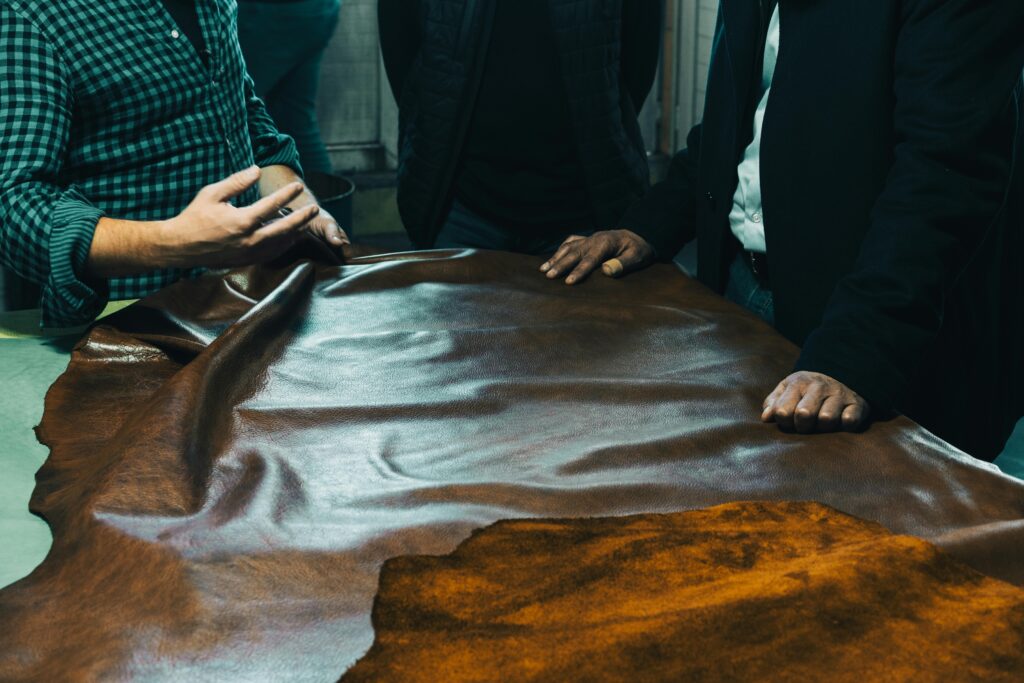
I source hides through distributors who work with specific tanneries, most of them in France and Tuscany. Conceria Walpier. Badalassi Carlo. La Perla Azzurra. These names are not meant to impress anyone at dinner. They’re names that mean something to people who work with luxury leather bags handcrafted the old way. They mean consistent quality. They mean provenance I can trace. They mean leather that will still look remarkable in a decade, assuming I don’t ruin it somewhere between here and there.
When a hide arrives in my workshop, I spread it out under natural light and begin what might look, to an outside observer, like a writer staring at a blank page for an unreasonable amount of time, waiting for the Muse to descend from on high. What I’m actually doing is reading. A hide has geography. The back—what we call the “bend”—has the tightest, most consistent grain. The belly is looser, prone to stretch. The shoulder has character but less uniformity. A bag meant to hold its shape for twenty years cannot be made from just any section.
I’m also looking for the marks of living. Full-grain leather shows everything the animal experienced—healed scratches, insect bites, growth marks. These aren’t flaws. They’re proof of origin, evidence that your bag came from something real rather than a factory extruding “genuine leather” or vegan leather or “pleather” (plastic leather) from who-knows-what. But they need to be positioned thoughtfully. A scar across the front panel tells a story; a scar across the closure mechanism might create a problem.
Does all this sound excessive? I understand. But he decisions made at this stage determine everything that follows. Like orienting your dream house towards a great view before construction even begins.
While I’m selecting leather, I’m also thinking about you—what you want this handmade leather bag to become over the next decade. Because the tanning method determines that future.
Vegetable-tanned leather is the ancient method. The hide spends weeks, sometimes months, in vats containing natural tannins from tree bark and plant materials. The result is leather with a firm, almost waxy feel when new—leather that’s alive in ways that become apparent over time. It absorbs the oils from your hands. It responds to moisture, to sun, to the simple fact of being touched every day. A vegetable tanned leather bag develops patina—a word that means, essentially, “evidence of your life together.” The bag you receive will look different in a year. Richer. Deeper. More complex. More yours.
Chrome-tanned leather is the modern approach—hides treated with chromium salts in a process that takes about a day. Soft from the moment you touch it, lighter in weight, superior water and stain resistance. The forest green or burgundy you choose will stay that exact shade. It won’t darken. It won’t develop patina in the traditional sense. It will maintain that polished appearance for decades.
Now, I need to address something you may have read elsewhere. Some sources suggest chrome-tanned leather is somehow inferior—the industrial compromise, the shortcut. This is nonsense. Premium chrome-tanned leather from reputable tanneries is not a compromise. It’s a deliberate choice that serves different preferences and lifestyles. Some of my clients want a bag that evolves; others want a bag that endures unchanged. Both are valid. The artisan’s job is to understand which you are.
A machine die-cuts leather in seconds. Perfectly uniform, every time.
I cut by hand, and the cutting itself takes up to an hour for most bags. So why mention it? Because the cutting is the smallest part of what happens at this stage. The preparation work—the thinking made physical—is where the hours accumulate.
Leather has a fiber structure that stretches more one way than another—looser across the animal’s body, tighter along the backbone. Cut a strap across this structure, and it will elongate under the weight of your belongings, slowly sagging over the years. Cut it along the backbone direction, from the tightest part of the hide, and it holds. You’ll never see this decision. You’ll only experience its consequences, years later, when your bag either maintains its shape or doesn’t.
Then there’s skiving—thinning the leather where pieces will overlap or fold, so seams lie flat instead of bulging and the edges are subtly more narrow. This is slow, careful work with a blade kept sharper than you’d believe possible. Too aggressive, and you weaken the leather. Too conservative, and the bag looks amateurish, lumpy at the joints.
And the holes. Every stitch hole is pre-punched with a pricking iron. This isn’t just marking where stitches go—it’s setting their angle. Holes punched at the wrong angle produce stitches that lie crooked. For a bag with eight hundred or more stitches, this preparation alone represents hours of work. Hours you’ll never see, absorbed into a surface that simply looks… correct.
Cutting and preparation: somewhere between three and four hours. The cutting itself: forty-five minutes, maybe. The rest is everything that makes the cutting possible.
Here’s something most people don’t realize about bespoke leather tote bags and structured handbags: the leather alone isn’t what makes them hold their shape. What makes them hold their shape is what’s hidden inside.
Pick up a bag you currently own. Feel between the outer leather and the lining. Is there anything there? Or is it just… empty? If empty, that explains why the bag has likely softened in all the wrong places, why the sides bow inward, why it no longer stands upright on its own.
In my bags, there’s an entire hidden architecture of reinforcement materials. Microfibra for the body panels—it provides moderate stiffening that transforms even soft leather into something structured. Velodon for areas that need stretch resistance without bulk. Brio for bag bases that must support weight while standing unsupported. Salpa for padded shoulder straps where comfort matters as much as appearance. Sometimes Oslo memory foam for quilted designs, where I want dimension that slowly lofts up between stitch lines.
I realize these names mean nothing to you, and that’s fine—they’re not supposed to. The point is that each section of a bag requires different support: stiffer at the base, more flexible at the gussets, padded or reinforced at the straps. Each reinforcement must be cut precisely, bonded with the right adhesive, positioned to account for seam allowances. This is engineering that disappears entirely into the finished object.
Selecting, cutting, and installing these materials: two to three hours. For something you will never see, never touch, never consciously notice. You’ll only notice when the bag still stands upright three years from now, when the handles haven’t stretched, when the bottom hasn’t bowed. You’ll notice what didn’t happen.
This is where the most dramatic time difference exists between what I do and what factories do.
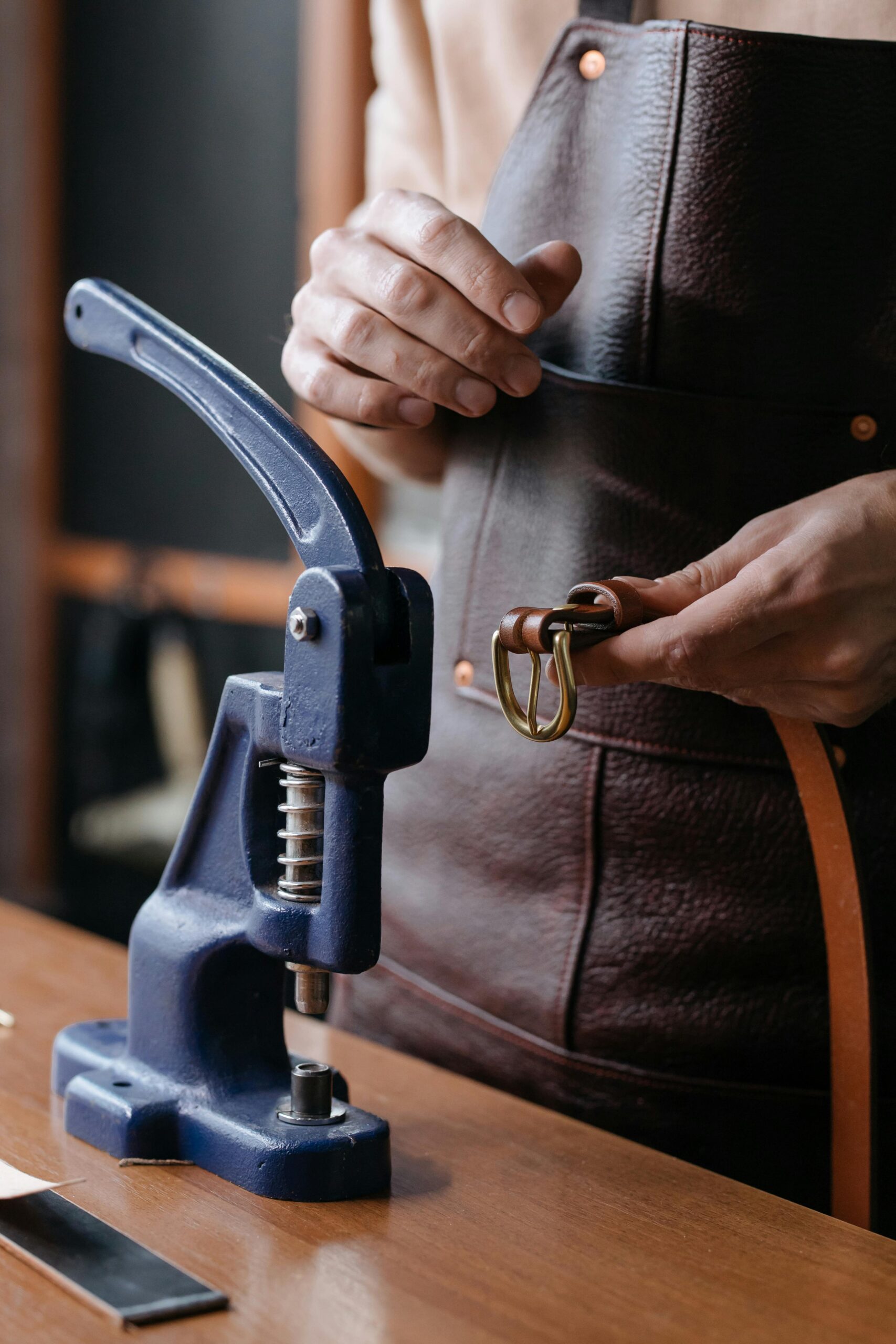
A sewing machine can run a seam in seconds. I stitch by hand using a technique called saddle stitching, and the same seam takes an hour or more. The difference isn’t just speed—it’s structural integrity.
Machine stitching uses what’s called a lockstitch: one continuous thread that, if broken at any point, can unravel the entire seam like a zipper. Saddle stitching uses two needles, two threads, creating an X at every single hole. Cut the thread anywhere—snap it, wear through it, have a dog chew it—and the stitch on either side holds. The seam doesn’t fail. This is how saddles survived centuries of stress from horses and riders. It’s how your bag will survive decades of daily use.
Each stitch requires: a needle from the front, a needle from the back, pull tension evenly on both threads, advance to the next hole. For a hand stitched luxury handbag with 2,500 stitches—which is typical for a medium tote—that means 2,500 repetitions of this sequence. Maintaining consistent tension throughout requires the kind of focus that doesn’t allow for multitasking. I can’t stitch and listen to podcasts. I can barely stitch and think about anything other than the stitch. But I get to meditate upon my work!
Hand-stitching a medium bag: twelve to eighteen hours of focused work, spread across multiple days because eyes tire, hands cramp, and attention wavers. Rushing this is how you get wavy, inconsistent seams that look amateurish and feel wrong. The result of patience is a line of stitches that lies perfectly straight—or rather, perfectly consistent with the subtle variations that hand work produces. Not machine-perfect. Human-perfect.
If you want to assess any leather bag quickly—including the one you’re carrying right now—look at its edges. This is where shortcuts become visible and where genuine skill announces itself.
The raw edge of cut leather is rough, fibrous, exposed. Something has to be done with it. What gets done depends entirely on the type of leather.
For vegetable-tanned leather, I burnish the edges. This means: bevel with a tool. Sand through progressively finer grits. Apply a natural compound—gum tragacanth or a Japanese product called Tokonole. Burnish with friction using a wooden slicker or canvas cloth, which generates heat that compresses the fibers. Sand again. Apply more compound. Burnish again. Some edges get five or six passes before they achieve that smooth, slightly glossy finish that looks like it grew that way.
The result isn’t painted over. It is the leather, sealed and finished. And here’s what matters: a properly burnished edge on vegetable-tanned leather will patina alongside the rest of the bag, aging together like old friends.
Chrome-tanned leather, however, doesn’t burnish. The fibers won’t compress the same way. For these leathers, edge paint is the appropriate method—and done well, it creates a refined, durable finish. The process: sand the edge smooth. Apply a thin coat of quality edge paint. Allow to dry completely. Sand lightly. Apply another thin coat. Repeat for three to five coats minimum, sanding between each. Never thick coats, which crack. Build up gradually.
You’ve probably owned bags with edge paint that cracked and peeled within a year. That’s not evidence that edge paint is bad—it’s evidence that someone did it badly. One thick coat, cheap materials, inadequate prep. Quality edge paint, properly applied, lasts.
Edge finishing alone: four to six hours for a typical bag. For straps, top edges, pocket openings—every inch of exposed edge requires the same treatment. The same care. The same time.
The final stages bring all components together—and reveal immediately whether the earlier work was precise.
Hardware installation sounds simple until you’ve done it wrong. Solid brass or stainless steel versus zinc alloy versus plated metals—the differences in weight, corrosion resistance, and longevity are dramatic. And the installation itself requires precision: holes sized exactly right (too small and you damage the leather forcing it through; too large and it wobbles), posts set perfectly straight, rivets secured without gouging the surface.
Assembly sequence matters in ways that aren’t obvious until you’re holding pieces that don’t fit together because you attached them in the wrong order. Some components must be installed before others can be stitched. Some stitching must happen before certain pieces can be aligned. The artisan works methodically, checking fit repeatedly, because mistakes here are difficult to undo without damaging leather.
Before the bag leaves my workshop, the leather is conditioned, if needed—oils replenished after all the handling during construction. The leather needs time to absorb these products. Then comes inspection under strong light: stitch consistency, edge quality, hardware alignment, overall shape. If I find problems, I fix them. More time, but necessary.
Assembly and finishing: four to six hours. And then the bag is done. Except it isn’t, really, because there’s another kind of hour that never appears on any timeline.
Behind every bag I make, there are dozens you’ll never see. Prototypes. Tests. Glorious, instructive failures.
A master craftsman of leather bags doesn’t emerge fully formed. The title gets earned through hours of deliberate practice, material testing, technique refinement, and honest assessment of what doesn’t work. New leathers from different tanneries require testing—how do they cut, skive, burnish, age? New reinforcement materials must be evaluated for compatibility. Hardware samples get assessed for weight and function before being specified for client work.
New designs begin as sketches, become paper patterns, then leather prototypes. Prototypes reveal problems invisible on paper—proportions that don’t work in three dimensions, closures that don’t function smoothly, structural weaknesses that only appear under load. Each iteration burns materials and time. This development cost gets distributed across every bag eventually made from that design.
When you hire a professional—a doctor, an architect, an attorney—you don’t pay only for the hours they spend on your specific matter. You pay for the years of training and experience that allow them to serve you competently. The same is true here. Every bag I make benefits from the ones that came before, including the failures that taught me what not to do.
These hours don’t appear on any invoice. But they’re present in every piece.
Let me add it up for you.
Leather selection: two to three hours. Cutting and preparation: three to four hours. Stiffeners and reinforcement: two to three hours. Hand stitching: twelve to eighteen hours. Edge finishing: four to six hours. Hardware and assembly: four to six hours. Conditioning and inspection: one to two hours.
Total: twenty-eight to forty-two hours of direct labor.
These hours can’t be compressed without compromise. Eyes tire; hands cramp; attention wavers. Edge paint needs drying time between coats. Leather needs to rest after conditioning. A thirty-five-hour bag spans two to three weeks of actual calendar time—which is why the woman from Connecticut waited three weeks, and which is why her bag will still look remarkable when bags bought the same month at department stores have been donated to charity.
For comparison: an industrial bag requires perhaps twenty to forty minutes of human labor, with machines doing the rest. Production capacity: hundreds per day from a factory, versus one per week from my workshop.
This is the honest math behind investment quality leather handbag pricing. Not marketing. Not exclusivity manufactured through artificial scarcity. Just time—irreducible, human, unhurryable time.
I began this by telling you about a woman who asked if I could work faster.
But she wasn’t frustrated. She was curious. She’d owned designer bags from brands whose names you’d recognize, and she’d watched those bags deteriorate in ways that felt almost insulting given what she’d paid. She was trying to understand why a one-of-a-kind leather purse from an artisan leather goods atelier she’d never heard of might be different.
So I explained the hours. All of them. The selection, the cutting, the invisible architecture, the stitching, the edges, the assembly, the years of learning that made any of it possible. And she said something I’ve been thinking about ever since:
“The wait isn’t a bug. It’s proof that something real is happening.”
Happily, I agreed. The weeks between your order and your bag arriving aren’t delays. They’re evidence. Evidence that someone is selecting leather under natural light, reading the hide’s geography. Evidence that holes are being punched at precisely the right angle for stitches that will hold for decades. Evidence that edges are being finished in five passes instead of one. Evidence that the internal architecture is being built to support a bag that will still stand upright, still hold its shape, still close smoothly long after faster-made alternatives have found their way to donation bins.
I realize this isn’t for everyone. Most people want their bag now, and that’s fine—the world has many options for now. What I offer is different: heirloom quality leather accessories made by hand, one at a time, at a pace the materials and methods require. Small batch luxury leather goods for people who have grown tired of being marketed to, who can afford anything but are choosing deliberately, who understand what the time means and value it accordingly.
One-of-a-kind people deserve one-of-a-kind bags.
The wait is how you know yours will be.
—
If you’re curious what a bag made this way feels like in your hands, explore the collection Offerings or reach out about custom work. Membership in our Private Atelier is free, by invitation.